
🔬 Research beta · specialists · non-diagnostic
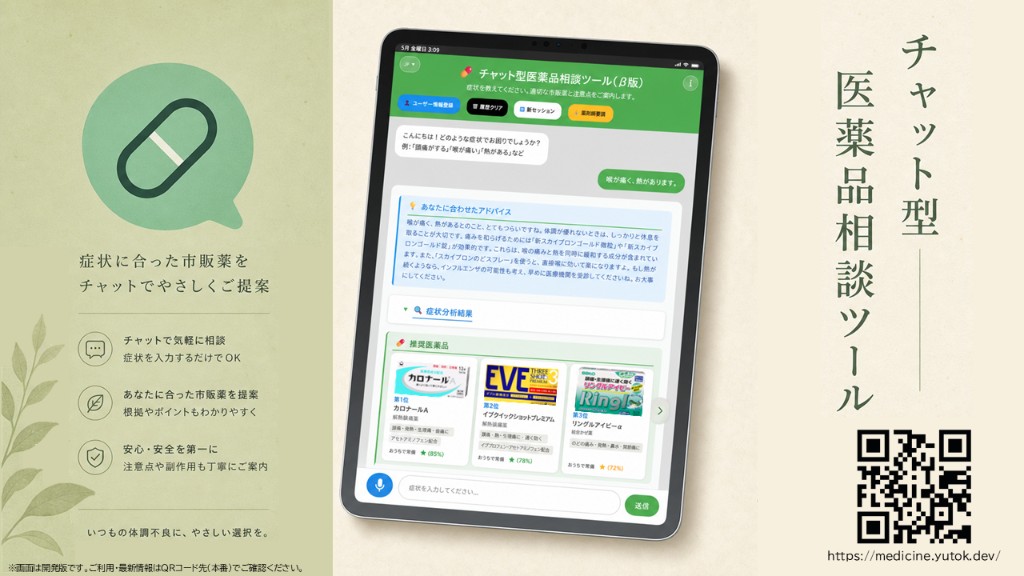
Chat guidance for OTC choices
Rule-based scoring × LLM assist. Organizes OTC options and cautions from symptoms and context. This beta lets specialists evaluate live chat behavior—not a substitute for diagnosis or prescribing.
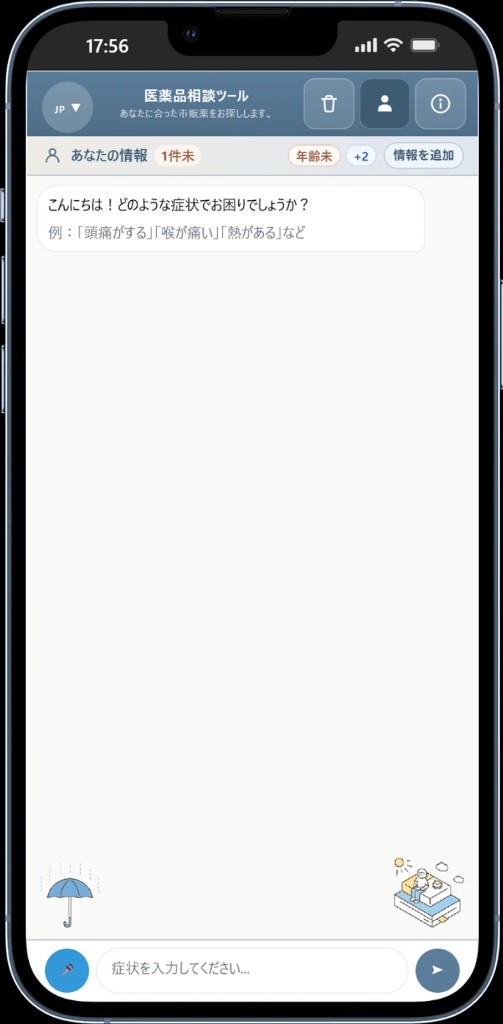
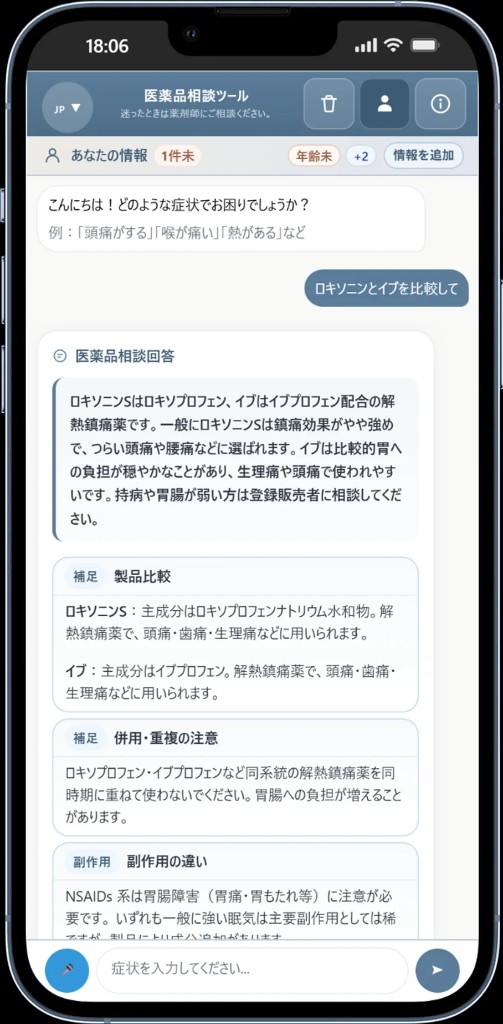
- Chat-first intake — describe symptoms in plain language
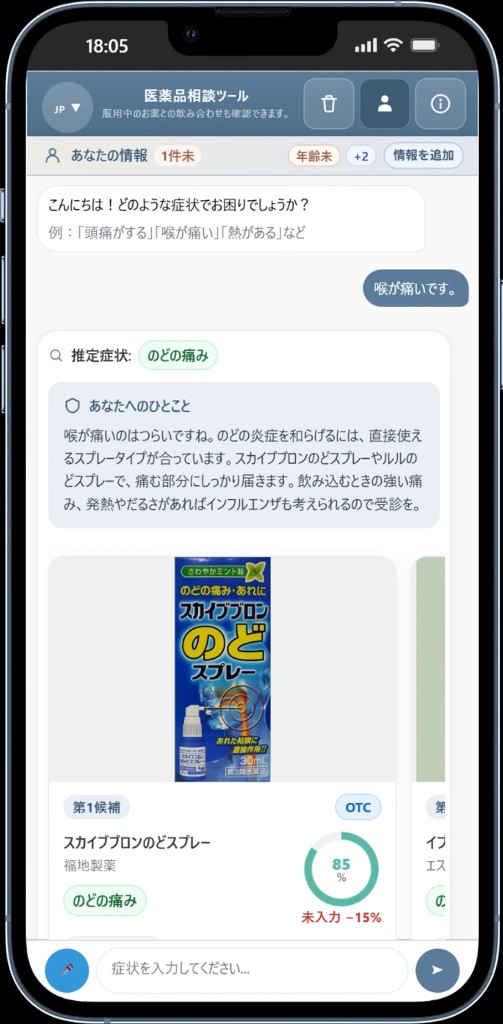
- Rule-based ranking — rationale, overlap warnings, and care guidance
- Four languages — Japanese, English, Chinese, Korean (DeepL)
01 Challenges
Three pressures on the ground
Aging populations, language barriers, and e-commerce are shifting demand—and strain—on pharmacies and shoppers alike. Gaps in counseling time can prolong uncertainty and unsafe choices.
-
Language barriers
Visitors and residents may struggle to consult in their language and choose appropriate OTC products.
-
Staffing pressure
Pharmacies have limited time for counseling, leaving some users uncertain.
-
Hard to choose
Users may not know which OTC fits their symptoms and worry about safety.
02 How it works
Three steps to use
-
Describe symptoms
Type symptoms and context in plain language—no medical jargon required.
-
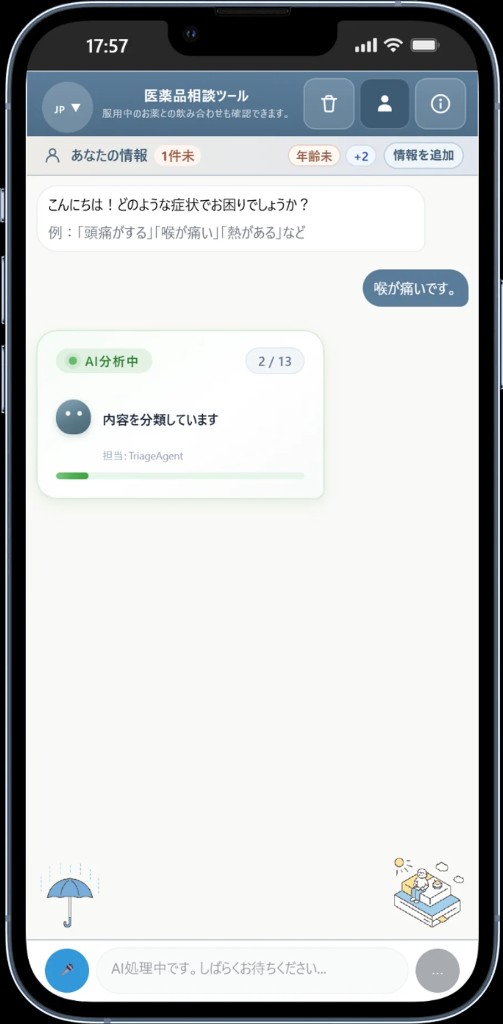
See organized options
Drug DB, pharmaceutical rules, and rule-based scoring are core; the LLM assists NLU and questions.
-
Use as reference
Review cautions and when to seek care; consult a pharmacist or clinician before buying or taking medicine.
03 Features
Four strengths
-
Safety by design
Rule-based core; refers to in-person care when symptoms are serious.
-
Hybrid recommendation
Rule-based scoring drives drug selection; the LLM assists NLU and questions only.
-
Four languages
Japanese, English, Chinese, and Korean via DeepL API.
-
Accessibility
Font sizing, text-to-speech, and collapsible sections; WCAG AA–oriented contrast.
04 Safety
Use safely
This tool does not replace medical care, diagnosis, or prescribing.
- Seek in-person care promptly for severe or prolonged symptoms.
- In Japan, call 119 for emergencies and use public helplines or clinics as needed.
- If unsure about displayed information, consult a pharmacist or clinician before use.
- Share pregnancy/breastfeeding, pediatrics, other medicines, and allergies when you can in chat.
Escalation to a pharmacist may be available depending on the deployed app version.
05 Stack
Technology stack
Beta building blocks. Rule-based logic is core for drug selection; the LLM assists.
Ops & CI/CD
GitHub · GCP · Git · Linux
Frontend
HTML · CSS · JavaScript
Backend
Python · FastAPI · Docker · Gunicorn
Database

Neon · PostgreSQL
External APIs


OpenAI API · DeepL API
Multi-agent
In-house orchestration · Python · OpenAI API
More detail
- Recommendation: proprietary rule-based scoring (symptoms, efficacy, age, interactions, etc.)
- Multi-agent: with LLM_AGENT_ENABLED, ChatOrchestrator hands off after triage (Triage, Physical, Concierge, etc.)
- Frontend: HTML/CSS/vanilla JS (responsive)
- Logs: JSONL structured logs (access, performance, security)
06 Trust
Operations
Non-profit academic beta trial (per app overview documentation).
-
Source control
GitHub versioning; CI/CD via GCP Cloud Build.
-
Production hosting
GCP Cloud Run (asia-northeast1). Docker + Gunicorn.
-
Database
Neon PostgreSQL (serverless) for sessions and global state.
-
Logs & monitoring
JSONL structured logs; access, performance, and security monitoring.
Limited to healthcare, government, research, and pharmacy specialists—not a general public launch.
Try the specialist beta
Explore rule-based recommendations and LLM-assisted chat in the live UI.
Start chat